Building Trust Into a Legal-Tech Platform: Lessons From LawTime
People only book a lawyer online if they trust the platform. How verification, transparent booking, secure consultations and a real emergency path shaped LawTime.
 Oxid Labs Team 3 min read
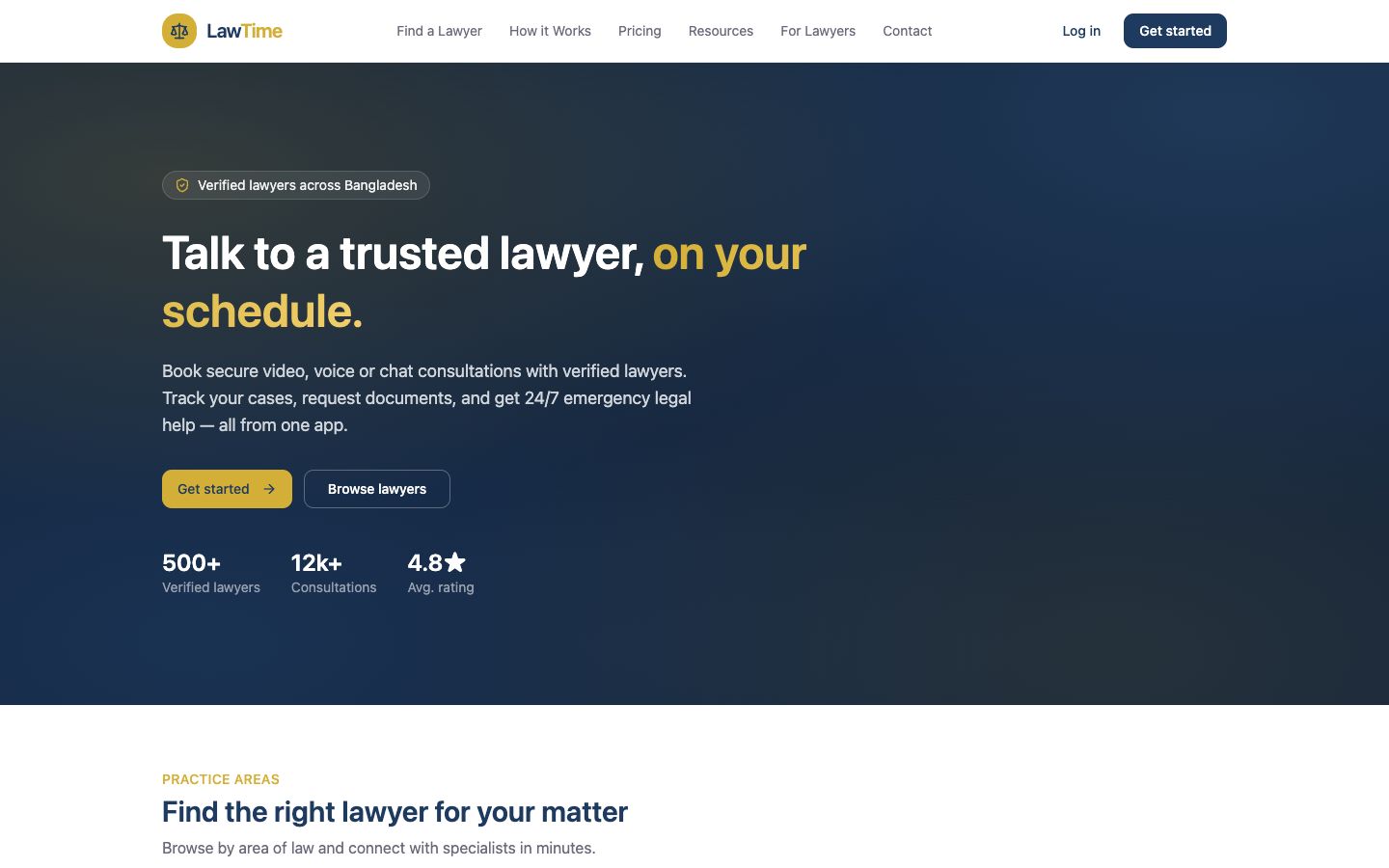
Finding a lawyer in Bangladesh usually starts with a phone call to a friend of a friend. It is slow, it depends on who you know, and it is hard to judge experience or price in advance. LawTime brings that process online: search verified lawyers, book a consultation, meet over video, voice or chat, and track the case afterwards.
Building a marketplace like this is less about features than about trust. Every design decision came back to one question: would someone in a stressful legal situation feel safe doing this here?
1. Verification is the product
Anyone can put a lawyer’s name on a website. What users are really paying for is confidence that the person is real and qualified. On LawTime, every lawyer is checked against Bar Council records before they appear in search. That process is slower than open sign-up, and it is the reason the platform is worth using.
2. Make choosing easy and honest
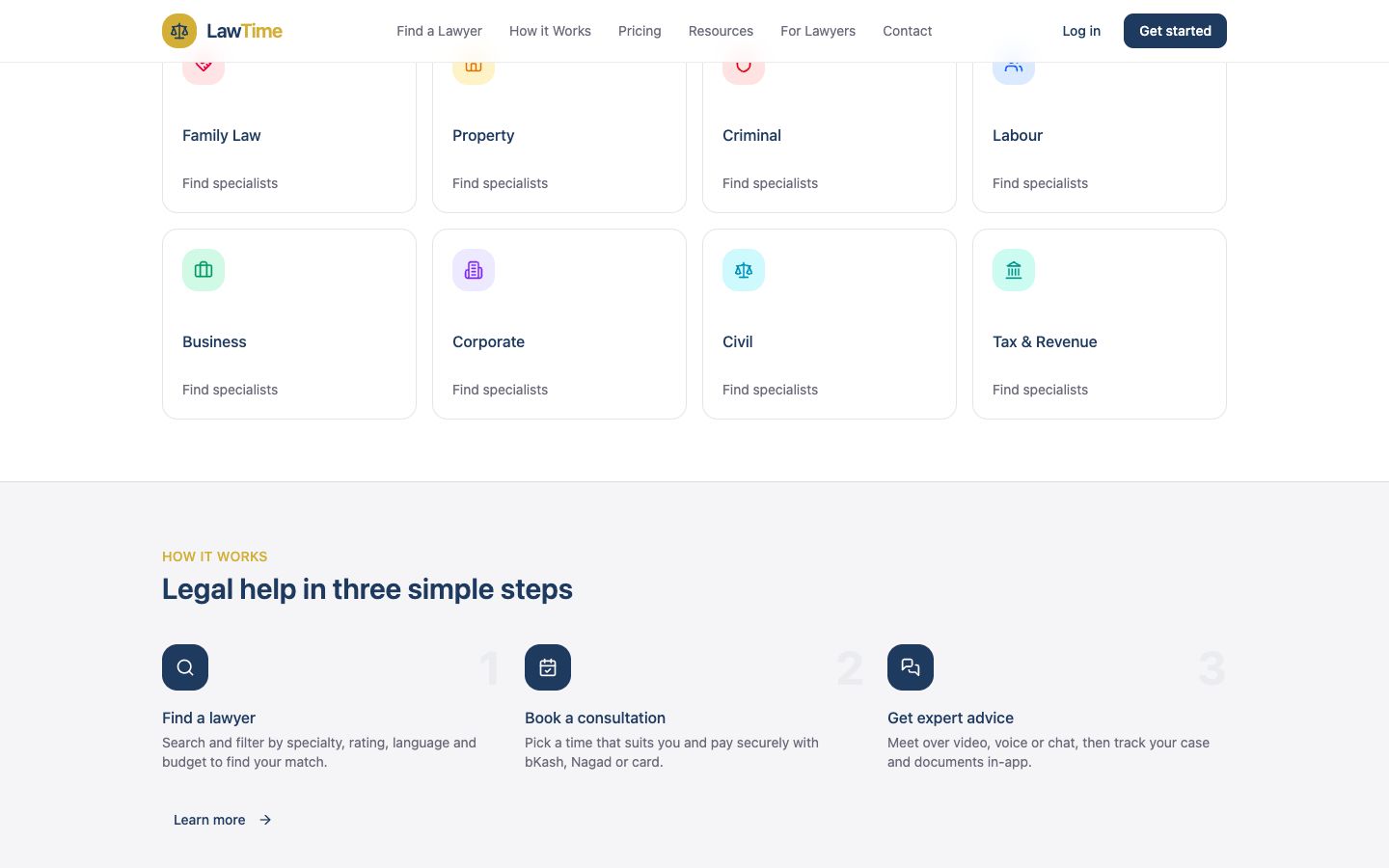
People search by the problem they have, not by legal jargon. So the platform is organised around practice areas (family, property, criminal, labour, business, corporate, civil, tax) and filters for specialty, rating, language and budget. Profiles show experience, location and starting price up front. No “call for price”.
3. Booking and payment people already trust
Booking is three steps: find a lawyer, pick a time, pay. Payment uses methods people already use daily, bKash, Nagad or card, so there is no new account or unfamiliar gateway to worry about.
4. Consultations that feel private
Legal conversations are sensitive. Consultations run over secure video, voice or chat from a phone or laptop, and documents and case progress live in the app rather than in scattered WhatsApp threads. Clients can request drafts and track their matters end to end.
5. Plan for the worst moment
Some legal problems cannot wait for a booking slot. LawTime has a 24/7 emergency request that alerts the lawyer on call, or the LawTime team if nobody is available. Raising one requires an account, so the lawyer has a number to call back. The national helplines (999 for police and ambulance, 16430 for legal aid) are shown without any sign-in at all.
That last detail is a good rule for any service that touches safety: never put help behind a login.
6. Two languages, one experience
Clients choose to work in Bangla or English, and lawyers list the languages they consult in. Language is part of trust, especially when the subject is complicated.
What this means for any marketplace
- Verify the supply side, and say how you do it.
- Show prices and experience before the first click on “book”.
- Use payment methods your users already trust.
- Keep sensitive conversations and documents inside the platform.
- Design the emergency path before you need it.
Platforms like LawTime combine web, mobile and real-time communication. That is the work of our Web, Mobile & Desktop Apps service. If you are planning a marketplace or booking platform, let’s talk.
Need help putting this into practice?
Talk to the team behind these products. We build AI, data and software for businesses like yours.